



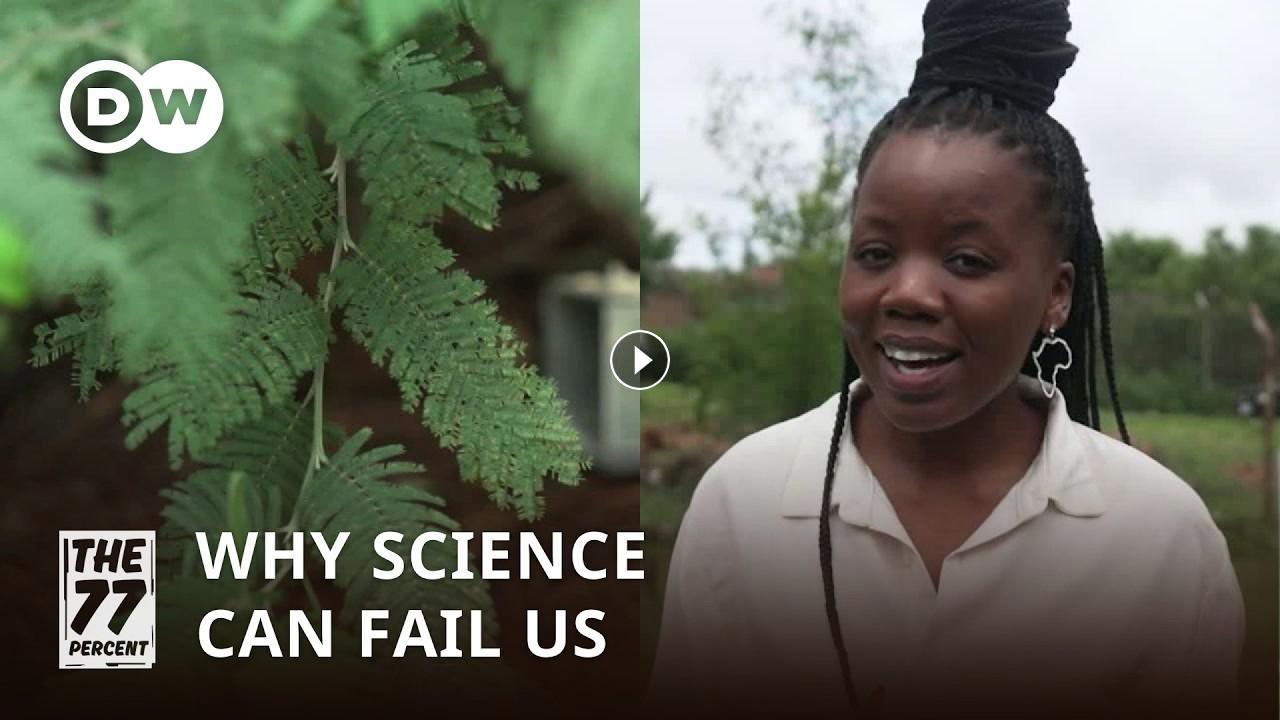
Scientists are often accused of working in isolation, producing research communities cannot access or use. This episode of Science Unlocked 2.0 follows two researchers in South Africa who are changing that — by making community collaboration a core part of their work. Nontokozo Mchunu travels to rural South Africa to find out: How can communities profit from findings of top notch scientists researching in their very area?
00:00 — Why can't 'ordinary people' always understand science?
00:44 — Invasive wattle trees in South Africa's grassland
02:00 — Why scientists must include communities in their research
02:53 — Field demonstration: Rodent traps in the wattle zone
03:54 — What research means for local people
06:03 — Why the grassland biome in South Africa urgently needs conservation
07:24 — Balancing scientific control with community livelihoods
08:15 — What does the X in PXE stand for?
09:00 — Why natural scientists need a humanities perspective
13:06 — What science needs to do to truly serve communities
Enjoyed this video? Check out more on our channel:
Join the conversation of our latest Street Debates : https://www.youtube.com/show/VLPLKkuogH1i04c1M6taIBDEWCvcFJBAzCF0?sbp=KgtMVlA2ZmhlLVdxZ0AB
Are you crazy about Science? Then you don’t wanna miss THIS! : https://www.youtube.com/watch?v=dek6CFOO0ck&list=PLKkuogH1i04erRJRy9cyE3P8XPQSSZrUH
Find all our latest videos here! : https://www.youtube.com/@DWThe77Percent/featured
-----
#DWAfrica #the77percent
-----
77 percent of Africans are younger than 35. Africa's youth holds the key to shaping the continent’s future. On our platforms we share their stories, their dreams and their challenges. Are you part of the 77 percent? Join the debate here on YouTube, and on the following platforms:
facebook.com/dw.africa
instagram.com/dw_the77percent
dw.com/77
dw.com/africa
00:00 — Why can't 'ordinary people' always understand science?
00:44 — Invasive wattle trees in South Africa's grassland
02:00 — Why scientists must include communities in their research
02:53 — Field demonstration: Rodent traps in the wattle zone
03:54 — What research means for local people
06:03 — Why the grassland biome in South Africa urgently needs conservation
07:24 — Balancing scientific control with community livelihoods
08:15 — What does the X in PXE stand for?
09:00 — Why natural scientists need a humanities perspective
13:06 — What science needs to do to truly serve communities
Enjoyed this video? Check out more on our channel:
Join the conversation of our latest Street Debates : https://www.youtube.com/show/VLPLKkuogH1i04c1M6taIBDEWCvcFJBAzCF0?sbp=KgtMVlA2ZmhlLVdxZ0AB
Are you crazy about Science? Then you don’t wanna miss THIS! : https://www.youtube.com/watch?v=dek6CFOO0ck&list=PLKkuogH1i04erRJRy9cyE3P8XPQSSZrUH
Find all our latest videos here! : https://www.youtube.com/@DWThe77Percent/featured
-----
#DWAfrica #the77percent
-----
77 percent of Africans are younger than 35. Africa's youth holds the key to shaping the continent’s future. On our platforms we share their stories, their dreams and their challenges. Are you part of the 77 percent? Join the debate here on YouTube, and on the following platforms:
facebook.com/dw.africa
instagram.com/dw_the77percent
dw.com/77
dw.com/africa

Be the first to comment
Up Next
Autoplay
-
09:07

International Day of Rural Women | The contribution of rural women to development
-
02:43
S Africa vaccinations: Rural communities demand fair treatment
-
World of Business - Transforming Rural Gutu into a Business Hub (Rural Industrialisation)
-
02:02
Bikers In Eastern Uganda Help Rural Communities Access Emergency Healthcare
-
07:35
International Day of Rural Women | The role that rural women play in society
 Loading...